Grammar

Grammar Terminology

Arabic Grammar Terms and Structure #

This section introduces essential Arabic Grammar (نحو عربي) terms, grouped into clear categories. Each term is listed with its Arabic equivalent and a concise explanation.


🟦 Sentence Structure #

English TermArabic TermExplanation
Verbal Sentenceجُمْلَة فِعْلِيَّةA sentence beginning with a verb. Structure: Verb → Subject → Object.
Nominal Sentenceجُمْلَة اِسْمِيَّةA sentence beginning with a noun. Structure: Subject (مبتدأ) → Predicate (خبر).
SubjectمُبْتَدَأٌThe topic of a nominal sentence.
PredicateخَبَرٌWhat is said about the subject in a nominal sentence.
Objectمَفْعُولٌ بِهِThe noun receiving the action in a verbal sentence.

🟨 Parts of Speech #

English TermArabic TermExplanation
NounاِسْمٌA word that refers to a person, place, thing, or idea.
VerbفِعْلٌA word that shows an action or occurrence.
AdjectiveصِفَةٌDescribes a noun; matches in gender, number, and case.
AdverbظَرْفٌModifies a verb or adjective (e.g., quickly, yesterday).
PronounضَمِيرٌReplaces a noun (e.g., he, she, it, we).
Active Participleاِسْمُ الْفَاعِلِDescribes the doer of an action (e.g., كَاتِب = writer).
Passive Participleاِسْمُ الْمَفْعُولِDescribes the one who the action is done to (e.g., مَكْتُوب = written).

🟩 Verb Tenses and Moods #

English TermArabic TermExplanation
Past TenseالْمَاضِيIndicates a completed action.
Present TenseالْمُضَارِعُIndicates an ongoing or habitual action.
Imperative / CommandالْأَمْرُUsed to give orders or requests.
Jussive MoodالْمَجْزُومُUsed after particles like lam (لَم) or li (لِـ); removes final vowel.
Active VoiceمَعْرُوفٌThe subject performs the action.
Passive VoiceمَجْهُولٌThe action is done to the subject.

🟥 Cases and Declension #

English TermArabic TermExplanation
Nominative CaseالْمَرْفُوعُTypically for subjects; marked with ḍammah (ـُ).
Accusative CaseالْمَنْصُوبُFor objects or adverbs; marked with fatḥah (ـَ).
Genitive CaseالْمَجْرُورُUsed after prepositions or in iḍāfah; marked with kasrah (ـِ).
Declinable NounمُعْرَبٌA noun whose ending changes based on grammatical position.
Fully DeclinableمُنْصَرِفٌAccepts all case endings and tanwīn.
Partially Declinableغَيْرُ مُنْصَرِفٍDoes not take tanwīn and is limited in case endings.
Indeclinable NounمَبْنِيٌّA noun whose form remains fixed.

🟪 Possession (Iḍāfah) #

English TermArabic TermExplanation
Possessed WordمُضَافٌThe item owned; the first part of an iḍāfah phrase.
Possessor (of the item)مُضَافٌ إِلَيْهِThe owner; always in the genitive case.

Home | Arabic

Verbs

Verbs in Arabic ( فِعْلٌ ) #


ArabicEnglish
أَجَابَ – يُجِيبُ – إِجابَةٌanswer
وَصَلَ – يَصِلُ – وُصُولٌarrive
قَدِمَ – يَقْدَمُ – قُدُومٌarrive
سَأَلَ – يَسْأَلُ – سُؤَالٌask
حَاوَلَ – يُحَاوِلُ – مُحَاوَلَةٌattempt
كَانَ – يَكُونُ – كَوْنٌbe
اِسْتَطَاعَ – يَسْتَطِيعُ – اِسْتِطَاعَةٌbe able
وُلِدَ – يُولَدُ – وِلَادَةٌbe born
أَصْبَحَ – يُصْبِحُ – إِصْبَاحٌbecome
بَدَأَ – يَبْدَأُ – بَدْءٌbegin
اِعْتَقَدَ – يَعْتَقِدُ – اِعْتِقَادٌbelieve
أَحْضَرَ – يُحْضِرُ – إِحْضَارٌbring
اِشْتَرَى – يَشْتَرِي – شِرَاءٌbuy
حَمَلَ – يَحْمِلُ – حَمْلٌcarry
نَظَّفَ – يُنَظِّفُ – تَنْظِيفٌclean
جَاءَ – يَجِيءُ – جِيئَةٌcome
أَتَى – يَأْتِي – إِتْيَانٌcome
تَحَدَّثَ – يَتَحَدَّثُ – تَحَدُّثٌconverse
فَعَلَ – يَفْعَلُ – فِعْلٌdo
شَرِبَ – يَشْرَبُ – شُرْبٌdrink
أَكَلَ – يَأْكُلُ – أَكْلٌeat
أُكِلَ – يُؤْكَلُ – أَكْلٌeat
اِنْتَهَى – يَنْتَهِي – اِنْتِهَاءٌend
دَخَلَ – يَدْخُلُ – دُخُولٌenter
فَشِلَ – يَفْشَلُ – فَشَلٌfail
وَقَعَ – يَقَعُ – وُقُوعٌfall
أَنْهَى – يُنْهِي – إِنْهَاءٌfinish
نَسِيَ – يَنْسَى – نِسْيَانٌforget
أُعْطِيَ – يُعْطِي – إِعْطَاءٌgive
ذَهَبَ – يَذْهَبُ – ذَهَابٌgo
خَرَجَ – يَخْرُجُ – خُرُوجٌgo out
تَخَرَّجَ – يَتَخَرَّجُ – تَخَرُّجٌgraduate
حَدَثَ – يَحْدُثُ – حُدُوثٌhappen
سَمِعَ – يَسْمَعُ – سَمْعٌhear
قَتَلَ – يَقْتُلُ – قَتْلٌkill
تَعَلَّمَ – يَتَعَلَّمُ – تَعَلُّمٌlearn
اِسْتَمَعَ – يَسْتَمِعُ – اِسْتِمَاعٌlisten
نَظَرَ – يَنْظُرُ – نَظَرٌlook at
أَحَبَّ – يُحِبُّ – حُبٌّlove
اِحْتَاجَ – يَحْتَاجُ – اِحْتِيَاجٌneed
فَتَحَ – يَفْتَحُ – فَتْحٌopen
تَوَفِّيَ – يُتَوَفَّى – وَفَاةٌpass away
لَعِبَ – يَلْعَبُ – لَعِبٌplay
ثَبَتَ – يَثْبُتُ – ثَبَاتٌprove
قَرَأَ – يَقْرَأُ – قِرَاءَةٌread
اِسْتَلَمَ – يَسْتَلِمُ – اِسْتِلَامٌreceive
تَذَكَّرَ – يَتَذَكَّرُ – تَذَكُّرٌremember
رَجَعَ – يَرْجِعُ – رُجُوعٌreturn
رَكِبَ – يَرْكَبُ – رُكُوبٌride
قَامَ – يَقُومُ – قِيَامٌrise
جَرَى – يَجْرِي – جَرْيٌrun
قَالَ – يَقُولُ – قَوْلٌsay
بَحَثَ – يَبْحَثُ – بَحْثٌsearch for
رَأَى – يَرَى – رُؤْيَةٌsee
بَاعَ – يَبِيعُ – بَيْعٌsell
أَرْسَلَ – يُرْسِلُ – إِرْسَالٌsend
جَلَسَ – يَجْلِسُ – جُلُوسٌsit
نَامَ – يَنَامُ – نَوْمٌsleep
تَكَلَّمَ – يَتَكَلَّمُ – كَلَامٌspeak
تَكَلَّمَ – يَتَكَلَّمُ – تَكَلُّمٌspeak
اِنْطَلَقَ – يَنْطَلِقُ – اِنْطِلَاقٌstart
وَقَفَ – يَقِفُ – وُقُوفٌstop
نَجَحَ – يَنْجَحُ – نَجَاحٌsucceed
أَخَذَ – يَأْخُذُ – أَخْذٌtake
تَرْجَمَ – يُتَرْجِمُ – تَرْجَمَةٌtranslate
فَهِمَ – يَفْهَمُ – فَهْمٌunderstand
اِسْتَعْمَلَ – يَسْتَعْمِلُ – اِسْتِعْمَالٌuse
اِسْتَخْدَمَ – يَسْتَخْدِمُ – اِسْتِخْدَامٌuse
زَارَ – يَزُورُ – زِيَارَةٌvisit
اِنْتَظَرَ – يَنْتَظِرُ – اِنْتِظَارٌwait
اِسْتَيْقَظَ – يَسْتَيْقِظُ – اِسْتِيقَاظٌwake up
أَرادَ – يُرِيدُ – إِرادَةٌwant
شَاهَدَ – يُشَاهِدُ – مُشَاهَدَةٌwatch
فَازَ – يَفُوزُ – فَوْزٌwin
كَتَبَ – يَكْتُبُ – كِتَابَةٌwrite

Home | Verb

Verb Patterns

Verb Patterns #

Forms I–V #

Each verb entry follows the structure below:

Form # – Transitivity Status

Active ParticiplePresentPast
اِسْم الْفَاعِلالْمُضَارِعالْمَاضِي
Passive ParticiplePassive PresentPassive Past
اِسْم الْمَفْعُولالْمَبْنِي لِلْمَجْهُول (مُضَارِع)الْمَبْنِي لِلْمَجْهُول (مَاضِي)
Negative ImperativeImperativeVerbal Noun
نَهْيأَمْرالْمَصْدَر

🔠 Three Vowel Variants on Third Root Letter (in Present Tense) #

✅ Form I – Transitive (Fatha) #

فَتَحَ – يَفْتَحُ – فَاتِح
فُتِحَ – يُفْتَحُ – مَفْتُوح
فَتْح – اِفْتَحْ – لَا تَفْتَحْ
🔁 He opened

10 Verb Forms

10 Arabic Verb Forms (الأَوْزَان العَشَرَة) #

In Arabic, most verbs come from a set of three root letters. These roots can appear in 10 common patterns (called forms). Each form gives the root a slightly different meaning. Learning these helps you understand if something is passive, intensive, repeated, reciprocal, or caused by someone.


  1. 🔹 Form I – ٱلْفِعْلُ ٱلثُّلَاثِيّ ٱلْمُجَرَّد (faʿala) #

    Pattern: فَعَلَ / يَفْعَلُ / فِعْلٌ
    Meaning: The basic/root meaning of the verb
    Example: كَتَبَ – He wrote

Imperative

Imperative Form in Arabic (الأمر) #

Rules for Regular Verbs #

  1. Middle letter with fatḥa (ـَـ) or kasra (ـِـ) → Imperative starts with إِ
  2. Middle letter with ḍamma (ـُـ) → Imperative starts with أُ

Examples:

Verb (Past)Present (You masc.)Imperative (You masc.)Notes
كَتَبَأَنتَ تَكْتُبُأُكْتُبْḍamma → أُ
جَلَسَأَنتَ تَجْلِسُإِجْلِسْkasra → إِ
قَرَأَأَنتَ تَقْرَأُإِقْرَأْfatḥa → إِ
رَكِبَأَنتَ تَرْكَبُإِرْكَبْfatḥa → إِ

Plural Forms of رَكِبَ:

Numbers

Numbers (الأَعْدَاد) #

Arabic numerals and counting rules.

Numbers in Arabic #

1–10 (الأَعْدَاد الأَسَاسِيَّة) #

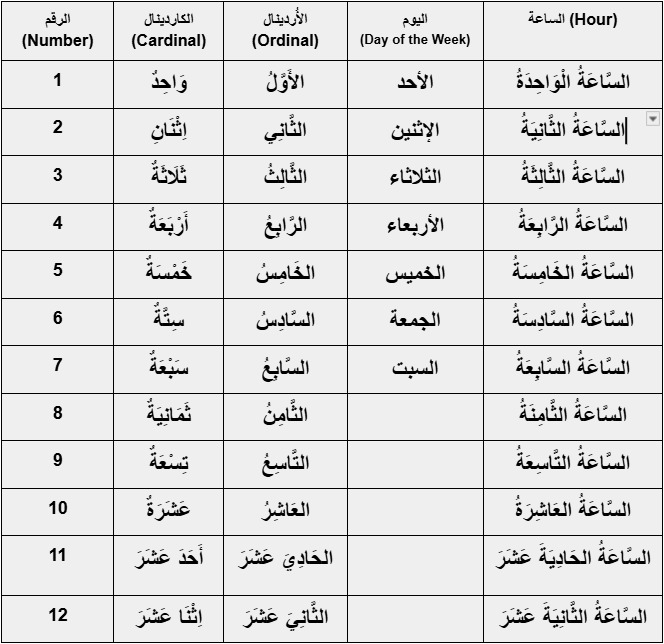
NumberArabic NumeralArabicTransliteration
1١وَاحِدwāḥid
2٢اِثْنَانithnān
3٣ثَلَاثَةthalātha
4٤أَرْبَعَةarbaʿa
5٥خَمْسَةkhamsa
6٦سِتَّةsitta
7٧سَبْعَةsabʿa
8٨ثَمَانِيَةthamāniya
9٩تِسْعَةtisʿa
10١٠عَشَرَةʿashara

11–19 (أَحَدَ عَشَرَ إِلَى تِسْعَةَ عَشَرَ) #

Numbers 11–19 are special:

Nouns: Plurals

Nouns: Plurals (الجمع) #

Arabic plurals fall into two main types:
Sound (regular) plurals and Broken (irregular) plurals.


Sound Plurals (الجمع السالم) #

A sound plural keeps the singular word intact and adds a regular ending.
The root structure does not change.

1. Masculine Sound Plural (جمع المذكر السالم) #

Formed by adding:

  • ونَ in the nominative (مرفوع)
  • ينَ in the accusative/genitive (منصوب / مجرور)
SingularPlural (Nom.)Plural (Acc./Gen.)Meaning
مُعَلِّممُعَلِّمُونَمُعَلِّمِينَteacher(s)
مُهَنْدِسمُهَنْدِسُونَمُهَنْدِسِينَengineer(s)
مُسْلِممُسْلِمُونَمُسْلِمِينَMuslim(s)

2. Feminine Sound Plural (جمع المؤنث السالم) #

Formed by changing ة → ات or adding ات.